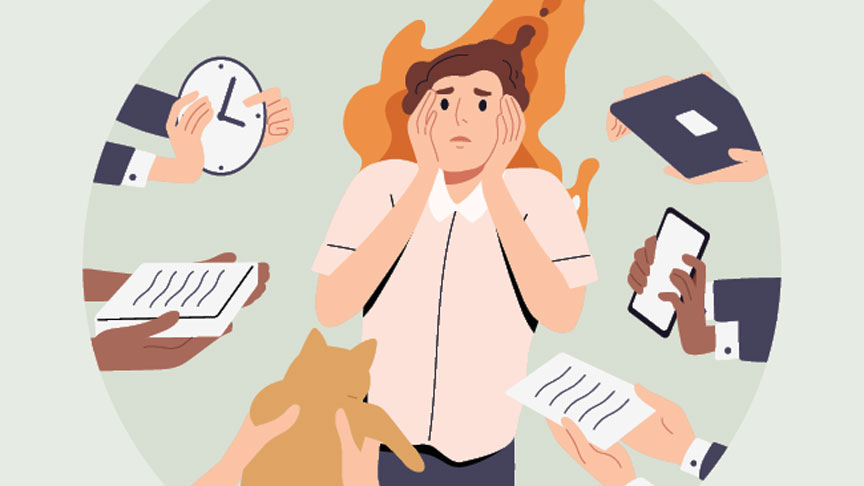
Burnout is not laziness, not depression, and not a personal weakness. It is an occupational syndrome resulting from chronic workplace stress that hasn’t been successfully managed. The World Health Organization formally recognized it in ICD-11 as a distinct medical phenomenon characterized by three dimensions: energy depletion, cynicism toward work, and reduced professional efficacy.
The statistics are staggering: 79% of American workers report experiencing burnout at some point. Among entrepreneurs, 88% struggle with mental health, 34% experience active burnout, and 27% have poor work-life balance. Yet burnout is not inevitable. It is largely preventable with evidence-based strategies—if you understand the underlying psychology and act early.
This guide provides the neuroscience of burnout, the three stages of its development, the five-stage recovery model, and seven evidence-based prevention frameworks grounded in peer-reviewed research. The core message: burnout is not fixed by willpower or vacation days. It requires structural change to the conditions creating it.
Part 1: What Burnout Actually Is—The Neurobiology
The Official Definition
The World Health Organization defines burnout as a syndrome resulting from chronic workplace stress that has not been successfully managed. It comprises three dimensions:
- Energy depletion or exhaustion – Emotional, physical, and cognitive weariness. You’re running on empty.
- Mental distance from your job / cynicism – Increased negativism, detachment, and depersonalization. You no longer care.
- Reduced professional efficacy – Diminished sense of personal accomplishment and effectiveness. Your work feels futile.
Critical distinction: Burnout is not depression, though it can overlap. Burnout is specifically occupational—caused by unresolved workplace stress, not general life depression. This distinction matters for treatment: depression requires psychiatric intervention; burnout requires both psychological support and structural workplace change.
The Neurobiological Reality
Burnout is not in your head. It’s in your brain’s stress-regulation system.
Chronic workplace stress dysregulates the hypothalamic-pituitary-adrenal (HPA) axis—your body’s central stress management system. This leads to persistent elevation of cortisol (your stress hormone), above-normal muscle tension, and constant sympathetic nervous system activation (fight-or-flight mode without “off” switch).
The brain changes are measurable:
- Prefrontal cortex impairment: Your executive function (decision-making, impulse control, planning) declines.
- Limbic system dysregulation: Emotional processing is disrupted; you experience emotional exhaustion combined with emotional numbness.
- Working memory deficits: Your ability to hold and manipulate information decreases.
- Neurotoxic effects: Persistent stress causes morphological brain changes, explaining why burnout produces cognitive decline that doesn’t resolve with rest alone.
This is why burned-out people describe feeling “foggy,” unable to focus or make decisions despite wanting to. Their brains literally are functioning differently.
Part 2: The Three Dimensions of Burnout (Detailed)
Understanding these three dimensions helps you recognize burnout in its early stages—when intervention is easiest.
Dimension 1: Emotional Exhaustion
This is the depletion of emotional resources. You feel weariness, fatigue, and inability to cope with the psychological demands of work.
- Early signs: Feeling tired despite adequate sleep; low emotional energy for interactions; difficulty adapting to workplace demands; increased irritability
- Later signs: Complete emotional numbness; feeling unable to care despite wanting to; emotional shutdown
- Root cause: Sustained psychological effort without adequate recovery
For entrepreneurs or people juggling multiple roles, this often manifests as: finishing a freelance project at 11 PM and immediately starting another, with no transition time to recover emotionally. Weeks of this creates emotional bankruptcy.
Dimension 2: Cynicism and Depersonalization
This is mental distance from work—a protective mechanism your mind creates when overwhelmed. You begin viewing work (and sometimes people at work) mechanically, without empathy.
- Early signs: Growing cynicism about work value; thinking “none of this matters”; treating clients/colleagues with less empathy; making sarcastic comments
- Later signs: Complete emotional detachment; viewing people as obstacles rather than individuals; cynicism about organization’s mission
- The danger: This dimension often precedes the other two and can be mistaken for healthy boundary-setting. It’s not. It’s a warning sign.
For shift workers or healthcare workers: cynicism often emerges after extended periods of high stress without recognition or autonomy. You shift from “I care about this work” to “I don’t care anymore.”
Dimension 3: Reduced Personal Accomplishment
This is the sense that your work no longer matters or that you’re ineffective.
- Early signs: Feeling less productive; questioning whether your work matters; self-doubt about competence; difficulty celebrating wins
- Later signs: Profound sense of professional incompetence despite objective evidence of competence; feeling that your efforts are futile; pervasive self-blame
- Root cause: Unachievable goals, lack of feedback/recognition, or work environments that prevent meaningful contribution
For ambitious people (entrepreneurs, professionals climbing career ladders): this dimension is particularly painful because they often have high achievement drives. The gap between expectations and reality creates profound frustration.
Part 3: Burnout Risk Factors—Where It Comes From
Burnout doesn’t emerge from nowhere. It results from specific work conditions combined with personal factors. Understanding these helps you identify whether you’re in danger.
The Primary Work Risk Factors (Most Significant)
Unsustainable Workload – This is the single largest predictor of burnout. Not just hours worked, but workload that exceeds sustainable capacity consistently. For freelancers or entrepreneurs building a business alongside full-time work, this might look like: day job 8 hours + freelance work 4 hours, seven days a week. No human maintains this indefinitely.
Lack of Autonomy – Lack of control over how and when work is accomplished accelerates burnout significantly, even when workload remains manageable. Someone told exactly what to do, when to do it, and how to do it—with no flexibility—faces higher burnout risk than someone with workload autonomy.
Insufficient Recovery – Work designed with no integration of renewal periods creates burnout. This is why “just take a vacation” rarely fixes burnout: if recovery time isn’t built into the work structure itself, returning to unsustainable conditions re-triggers it immediately.
Lack of Community/Belonging – Isolation amplifies all other stressors. People with strong workplace relationships show resilience even under demanding conditions. Those working alone (many freelancers, remote workers, shift workers) face higher burnout risk without deliberate community-building.
Values-Action Misalignment – When your personal values conflict with your organization’s practices, chronic cognitive dissonance emerges. Working for a company whose mission conflicts with your values, or being asked to do work you find unethical, creates persistent stress that accumulates.
Entrepreneurial-Specific Risk Factors
If you’re building a business or working irregular hours, additional vulnerabilities exist:
- Undefined work hours: Employees have 9-to-5. Entrepreneurs are either working or on-call. No mental off-switch.
- Decision fatigue: Constant high-stakes decisions without support structure. Every choice potentially impacts your business.
- Isolation: 27% of entrepreneurs struggle with loneliness. No collegial structure, no water-cooler conversations, no sense of belonging to a team.
- Financial anxiety: 39% of entrepreneurs worry about money. This persistent background anxiety accelerates burnout.
- Perfectionism: Entrepreneurs often have perfectionist tendencies that, combined with high workload, create burnout-prone conditions.
- No work-life boundary: Home is workplace; psychological separation becomes impossible.
For shift workers: circadian rhythm disruption, social isolation from normal schedules, and often less control over shift assignments amplify burnout risk.
Part 4: The Three Stages of Burnout Development—Early Intervention Is Key
Burnout doesn’t appear suddenly. It develops progressively through stages, each offering intervention opportunities. Early recognition at Stage 1 prevents progression to the crisis point.
Stage 1: Stress & Coping Phase (Most Missed—Most Treatable)
You’re under increased workload or stress, but still maintaining equilibrium. You’re using coping strategies (some healthy, some not).
| Indicator | What to Notice |
|---|---|
| Work hours increasing | Regularly staying late; bringing work home |
| Energy slightly lower | Still managing, but noticing fatigue |
| Some good days mixed with challenging ones | Not uniformly bad yet |
| Using coping mechanisms | Extra coffee, skipped exercise, compressed sleep |
| Still engaged | Care about work but noticing strain |
Why Stage 1 is critical: Intervention here is simplest. A workload adjustment, boundary-setting, or stress management practice can reset the system. But this stage is often invisible—both to you and to leadership. By the time burnout becomes obvious (Stage 3), much harder recovery is necessary.
Intervention: Identify stressors, implement recovery practices, consider workload reduction.
Stage 2: Chronic Stress Phase (Critical Intervention Point—Can Still Be Reversed Relatively Easily)
Stress is now persistent, not episodic. Recovery practices no longer work. Sleep disturbances emerge.
| Indicator | What to Notice |
|---|---|
| Fatigue not relieved by weekends | Sleep 10 hours on weekends and still feel tired Monday |
| Sleep disturbance | Insomnia, poor sleep quality, waking unrested |
| Cognitive difficulties | Concentration problems, memory lapses, word-finding, indecision |
| Beginning cynicism | “This doesn’t matter”; “Nothing I do makes a difference” |
| Physical symptoms | Headaches, GI issues, muscle tension, weakened immunity |
| Social withdrawal | Avoiding colleagues, declining social invitations |
| Performance declining | Missing deadlines, quality dropping, errors increasing |
Why Stage 2 is the intervention sweet spot: You’re not yet in crisis (life is still functioning), but warning signals are clear. Intervention here can prevent Stage 3 burnout. This is where organizational support or professional coaching becomes critical.
Intervention: Professional support (therapy, coaching), temporary workload reduction, medical check-in. This is not “just a bad week”—it requires real intervention.
Stage 3: Full Burnout / Crisis Phase (Requires Intensive Intervention)
Burnout is now severe. Your nervous system is in persistent crisis mode. Cognitive function is significantly impaired.
| Indicator | What to Notice |
|---|---|
| Severe exhaustion resistant to rest | Even weeks off don’t restore energy |
| Significant cognitive impairment | Difficulty making decisions; brain fog constant |
| Emotional dysregulation | Irritability, mood swings, emotional reactivity, numbness alternating |
| Serious depression/anxiety | Not just stress; clinical-level mental health symptoms |
| Physical health complications | Cardiovascular issues, serious sleep deprivation, metabolic problems |
| Social isolation | Withdrawn from relationships; possible relationship strain |
| Substance use risk | Increased alcohol, sleep medication, other coping mechanisms |
| Work performance severely declined | Significant errors, significant delays, possible work disability |
| Suicidal ideation risk elevated | Hopelessness about future; possible suicidal thoughts |
Why Stage 3 requires professional help: This is not fixable through self-discipline or weekend rest. This requires professional mental health intervention, possible medical leave, and lifestyle restructuring.
Part 5: Recovery Timeline and Stages
How long burnout recovery takes depends on severity and how early intervention occurs.
| Severity | Timeline | Characteristics | Recovery Support Needed |
|---|---|---|---|
| Mild | 1–3 months | Early intervention at Stage 1; adjustments possible while working | Self-care, boundaries, basic stress management |
| Moderate | 3–6 months | Caught at Stage 2; deeper nervous system recovery required | Mental health support, possible partial work reduction |
| Severe | 6–18 months | Full Stage 3; professional help essential; possible extended leave | Intensive therapy, medical management, lifestyle restructuring |
Critical insight: Early intervention dramatically shortens recovery. Stage 2 intervention = months to recover. Stage 3 intervention = a year or more. This is why recognizing early warning signs is so important.
The Five-Stage Recovery Model
Research (Gail North framework, combined with somatic healing principles) identifies five recovery stages:
Stage 1: Awareness & Acknowledgment (Weeks 1–2)
- Recognize burnout as real occupational phenomenon, not personal failure
- Identify specific stressors and patterns leading to burnout
- Understand cause-and-effect: “This work situation created this outcome”
Stage 2: Nervous System Reset (Weeks 1–4)
- Goal: Shift from sympathetic (alert/stress) to parasympathetic (recovery) dominance
- Tools: Time in nature, slow breathing (4-in, 6-out), meditation, rest
- Physical: Sleep prioritization (non-negotiable), gentle movement (not intense exercise yet)
- Result: Gradual calming; reduced baseline cortisol
Stage 3: Emotional Processing & Release (Weeks 3–12)
- Emotions buried under busyness now surface
- Essential: Therapy, journaling, creative expression, somatic practices (safe movement)
- Process: Allow feelings (anger, grief, fear) to emerge and be processed, not suppressed
- Why: Unprocessed emotions prevent full recovery
Stage 4: Rebuilding Energy & Boundaries (Months 2–6)
- Set real boundaries (work hours, communication limits, personal time)
- Cut back on energy-draining commitments
- Prioritize genuinely restorative activities (not just “productivity”)
- Gradual return to activities as energy rebuilds
- Build structures preventing recurrence
Stage 5: Long-Term Integration & Resilience (Months 6+)
- Recovery isn’t “bouncing back” to old pace
- It’s discovering sustainable rhythm honoring limits while maintaining engagement
- Maintain stress management tools permanently (not temporarily)
- Rethink relationship with work, achievement, and rest
- Build systems into life structure (not relying on willpower)
Part 6: Seven Evidence-Based Prevention Strategies
These strategies are grounded in research and proven effective. Unlike generic “self-care” advice, they address root causes.
1. Workload Management—The Foundation
Problem: Unsustainable workload is the single largest predictor of organizational burnout.
Evidence-Based Solutions:
- Workload audits: Objectively assess actual time required vs. allocated time. Many organizations assign tasks assuming 30-hour weeks when 50-hour reality emerges.
- Prevent strategic understaffing: Hire proactively based on project demands, not reactively after crisis.
- Scope containment: Establish clear processes for managing scope creep. When projects expand, adjust timelines or resources.
- Recovery-conscious scheduling: Integrate buffer time between intense projects. Plan work anticipating the need for recovery, not assuming constant productivity.
Implementation: Review workload monthly. If consistently exceeding 45-50 hours weekly (including all roles), workload is unsustainable.
2. Autonomy Enhancement
Problem: Lack of control over work accelerates burnout even when workload is manageable.
Evidence-Based Solutions:
- Decision-latitude expansion: Increase employee/self control over how and when work is accomplished, not just what must be done.
- Participatory work design: Involve those doing the work in designing workflows and processes. They understand bottlenecks; they generate solutions.
- Results-oriented environments: Focus on outcomes rather than process compliance. Trust people to manage how.
- Self-management authority: Teams manage resource allocation and prioritization rather than top-down mandates.
Implementation: If you’re self-employed, protect your autonomy. If employed, negotiate control over how/when (even if what/why is set). Research shows autonomy is more protective against burnout than workload reduction.
3. Community Cultivation
Problem: Isolation amplifies all other stressors. Strong relationships create resilience.
Evidence-Based Solutions:
- Collaboration architecture: Design work involving meaningful collaboration, not just parallel individual effort.
- Psychological safety: Create environment where people can discuss challenges without fear of punishment.
- Belonging initiatives: Structured approaches to inclusion beyond surface-level diversity efforts.
- Regular check-ins: Peer support and managed social connection reduce isolation.
Implementation: For remote workers and freelancers: deliberately build community. Join coworking spaces, professional groups, accountability circles, or online communities aligned with your work.
4. Values Alignment
Problem: Persistent misalignment between personal values and organizational/work practices creates cognitive dissonance and chronic stress.
Evidence-Based Solutions:
- Purpose clarity: Connect daily tasks to meaningful impact. “This data entry supports customer success” vs. just “this is required.”
- Values-action gap assessment: Regularly examine disconnects. If persistent misalignment, reconsider role/organization fit.
- Ethical congruence: Ensure business practices align with mission. If they don’t, burnout is inevitable.
- Impact visibility: Make the positive difference of work tangible and visible.
Implementation: Assess: Does your work align with your values? If not, even high pay and low workload won’t prevent eventual burnout.
5. Recovery Integration into Work Design
Problem: Recovery treated as afterthought; insufficient restoration built into work structure.
Evidence-Based Solutions:
- Ultradian rhythm alignment: Schedule work respecting natural 90-minute focus cycles followed by 20-minute recovery breaks.
- Microbreak normalization: Culturally support brief renewal throughout workdays (not frowned upon as laziness).
- Email rhythm policies: Organization-wide agreements about communication timing (e.g., no email after 6 PM).
- Meeting load management: Strategic reduction of meeting burden. Each meeting is fragmentation.
- Focus days: Weekly periods (e.g., Tuesdays and Thursdays) with minimal meetings, protecting deep work.
Implementation: Implement one: If working long hours, add 20-minute breaks after 90-minute focus blocks. If drowning in meetings, establish a “focus day” weekly.
6. Recognition and Acknowledgment
Problem: Unacknowledged effort and invisible work breed resentment and reduce sense of accomplishment.
Evidence-Based Solutions:
- Shift recognition away from outcomes only: Recognize collaborative behaviors, relationship-building, mentorship, and infrastructure work often invisible.
- Create specific recognition categories: Acknowledge sustainable work practices explicitly. “Thank you for protecting your evening for recovery” or “Great job mentoring new team member.”
- Regular positive feedback: Don’t wait for annual reviews. Frequent specific feedback maintains sense of accomplishment.
Implementation: If in leadership role, implement monthly recognition. If individual contributor, practice self-recognition—journal your daily accomplishments.
7. Leadership Alignment and Modeling
Problem: Leadership says “prevent burnout” while modeling 60-hour workweeks. Words don’t prevent burnout; behavior does.
Evidence-Based Solutions:
- Leaders take breaks: Visibly. Take vacations. Use your email curfew.
- Leaders set boundaries: Demonstrate that work has limits. Respond to after-hours emergencies rarely.
- Leaders acknowledge limits: Openly discuss capacity. “That’s more than we can do this quarter” normalizes sustainable decision-making.
- Manager training: Equip managers to recognize early burnout signs and respond supportively, not with additional pressure.
Implementation: If you’re in leadership, model the behavior you expect. If you’re not, advocate for leadership modeling by example.
Part 7: Early Warning System—Catching Burnout Before Crisis
The most effective prevention is early intervention. These warning signs appear in Stage 1 and Stage 2—when recovery is still relatively straightforward.
Physical Warning Signs:
- Persistent fatigue despite adequate sleep
- Sleep disturbance (insomnia, poor quality)
- Headaches, GI issues, muscle tension
- Weakened immunity (frequent colds)
- Change in appetite
Cognitive Warning Signs:
- Difficulty concentrating
- Memory problems or “brain fog”
- Difficulty making decisions
- Word-finding difficulty
- Slower processing speed
Emotional Warning Signs:
- Irritability or mood instability
- Cynicism about work value/impact
- Feeling overwhelmed despite no major change
- Numbness or emotional flatness
- Anxiety or pervasive worry
Behavioral Warning Signs:
- Withdrawing from colleagues
- Avoiding projects or meetings
- Increased absenteeism or sick days
- Less engagement in previously enjoyed work
- Working longer hours without completing work
Action If You Notice These: Don’t wait. These are Stage 1-2 signals. Implement one prevention strategy immediately: add recovery breaks, set a communication boundary, or seek support.
Part 8: Special Considerations for Entrepreneurs
Entrepreneurs face unique burnout risks: 88% struggle with mental health, 34% experience active burnout, and 27% have poor work-life balance.
Why Entrepreneurs Are Vulnerable:
- No fixed work hours; no “off” switch
- Every decision feels high-stakes
- 27% struggle with loneliness (isolated from colleagues)
- 39% worry about money (persistent background anxiety)
- No organizational support systems
- Perfectionism often drives entrepreneurship
Evidence-Based Entrepreneur Prevention:
- Set hard work boundaries: Define non-negotiable end time. 6 PM work stops. Not 6:30, not “when email slows down.” 6 PM.
- Build support network: Mentors, peer advisors, accountability partners. These relationships are business infrastructure, not luxury.
- Develop decision framework: Create rules for recurring decisions. This reduces decision fatigue significantly.
- Practice self-care preventatively: Treat sleep, exercise, healthy eating like business investments (because they are).
- Strategic, gradual growth: Rapid expansion creates operational stress. Sustainable growth prevents burnout better than fast growth followed by crash.
- Regular self-reflection: Monthly check-in: “On a scale of 1-10, how sustainable is my current pace?” <6/10 = change something now.
- Reframe failure as feedback: Perfectionism + high workload = burnout. Accept that failure is part of entrepreneurship.
Part 9: Recovery for Severe Burnout—When You’re Already in Crisis
If you’re at Stage 3, immediate action is necessary. This is not fixable through positive thinking.
Immediate Steps:
- See a healthcare provider: Rule out medical causes (thyroid, anemia, etc.) and discuss treatment options. Burnout often benefits from therapy and sometimes medication.
- Consider work leave: If possible, take 2–4 weeks off. Full disconnection (not checking email) helps nervous system reset.
- Prioritize sleep aggressively: Sleep deprivation exacerbates burnout. This might require sleep medication temporarily—use it.
- Engage professional support: Therapist specializing in burnout, burnout recovery coaching, or both. This is essential, not luxury.
- Assess work sustainability: After leave, returning to identical conditions re-triggers burnout immediately. Something must change: workload, role, organization, or boundaries.
Part 10: The Core Prevention Principle
Burnout prevention requires structural change to work conditions, not just individual willpower or self-care.
You cannot “wellness” your way out of burnout if:
- Workload remains unsustainable
- You have no autonomy over how work is accomplished
- Values-action misalignment persists
- Recovery time is not built into work structure
- Isolation remains unaddressed
Generic advice—”take a vacation,” “practice yoga,” “meditate”—won’t prevent burnout if underlying conditions remain unchanged. These are helpful, but insufficient.
Real burnout prevention requires asking: Why are you working unsustainable hours? What organizational structures created this? What would need to change for this to be sustainable?
Conclusion: Burnout Is Preventable
The critical insight from burnout research is this: burnout is largely preventable and, when caught early, eminently recoverable.
Stage 1 intervention (early stress recognition + boundary adjustments) prevents progression to Stage 2.
Stage 2 intervention (workload reduction + professional support) prevents crisis.
Stage 3 recovery is possible but requires months to years and significant lifestyle change.
You don’t have to experience burnout. If you’re experiencing Stage 1 symptoms—fatigue despite sleep, slight cynicism, declining engagement—recognize these as signals. Your body and mind are telling you something needs to change.
Acting on Stage 1 signals prevents the months or years of recovery that Stage 3 burnout demands.
The choice, and the power, is yours.